


Try one of our AirHull-enabled boats
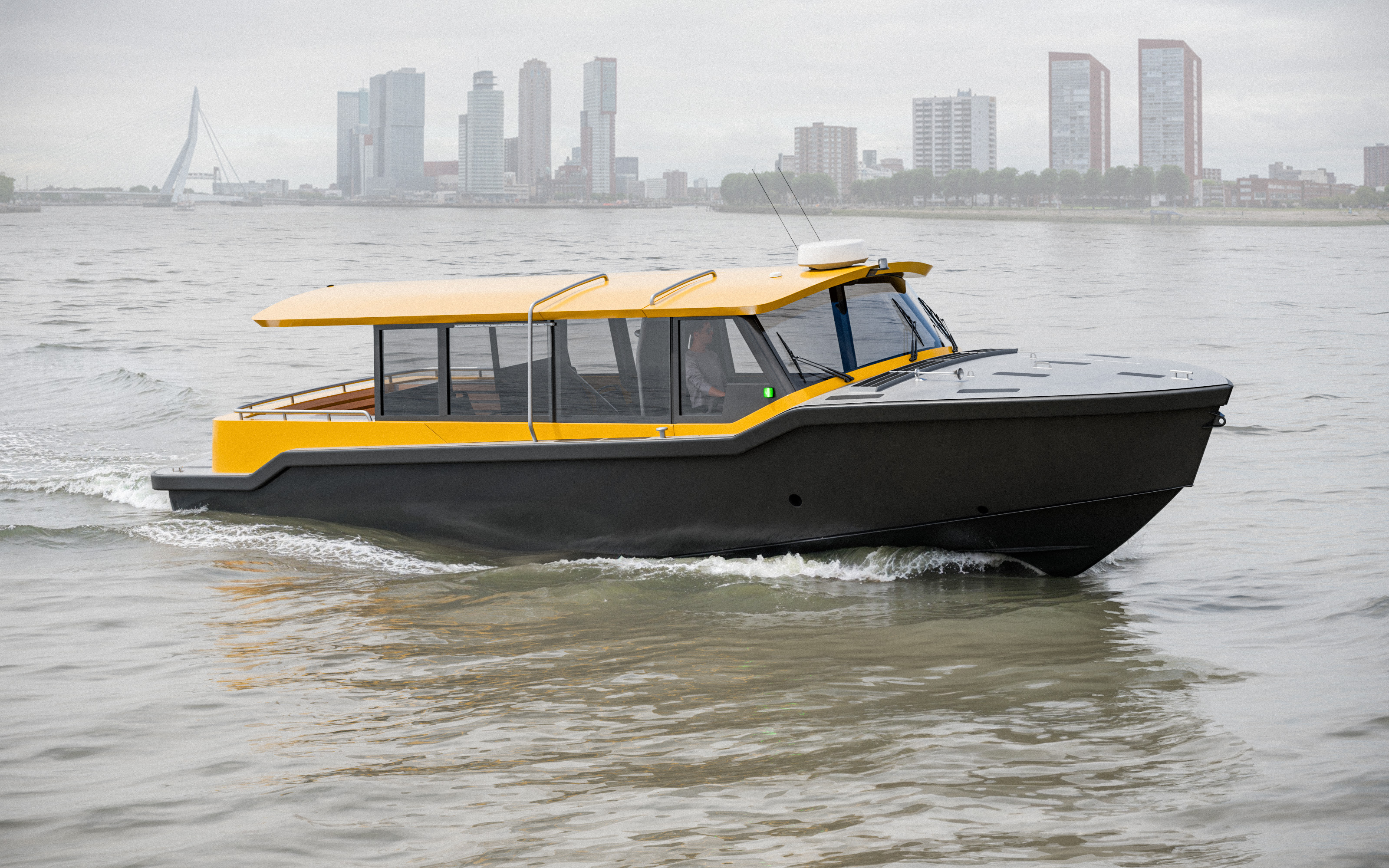
Electric AirHull water taxi for Watertaxi Rotterdam
Project managers

Pascal delivers a fully electric AirHull water taxi for Watertaxi Rotterdam, combining AirHull hull technology with the Pascal electric powertrain.
Electric AirHull water taxi for Watertaxi Rotterdam
Pascal is delivering a fully electric AirHull vessel for Watertaxi Rotterdam — the largest waterway passenger transport operator in Rotterdam, running a high-frequency taxi service across the city's rivers and harbours. The vessel combines Pascal's AirHull hull technology with our integrated electric powertrain and energy management system, purpose-built for the demanding operational profile of urban waterway transport.
Construction is underway, with the vessel being built by Alumax in Meppel, the Netherlands.
How AirHull extends range for an electric water taxi
Watertaxi Rotterdam operates a continuous, high-utilisation service across Rotterdam's waterways — vessels run for six or more hours a day, in all conditions, with minimal downtime tolerance. That operational reality shaped every aspect of the Pascal solution.
The vessel is built around Pascal's AirHull technology, which reduces hydrodynamic resistance by generating an air cushion beneath the hull as the vessel planes. In a fully electric vessel, this directly translates to extended range and reduced energy consumption — critical for an operator that cannot compromise on uptime or frequency of service.
The full Pascal powertrain scope covers propulsion, battery integration, power distribution, consumer management, and vessel controls — all in a single integrated architecture with the same operator interface and automation platform used across Pascal's vessel portfolio. This is the same system being deployed in the standalone powertrain contract Pascal has signed with Watertaxi Rotterdam for a separate catamaran vessel, giving the operator a consistent technology platform across their expanding electric fleet.
Zero-emission fleet by 2030: why Watertaxi Rotterdam chose Pascal
Watertaxi Rotterdam is the city's dominant waterway operator, with a public commitment to a fully zero-emission fleet by 2030 — a deadline that is increasingly underpinned by tightening municipal and national zero-emission regulation in the Netherlands. Their decision to adopt AirHull technology, and to integrate it with Pascal's own powertrain, is a strong commercial and technical validation.
This is also a comprehensive full-system delivery by Pascal: AirHull combined with the complete electric powertrain, in a high-demand professional operating environment, for an operator that knows exactly what their vessels need to do.
Technical scope: AirHull and electric powertrain
- AirHull technology (air cushion hull system)
- Fully electric propulsion
- Integrated energy management system (EMS)
- Battery system integration
- Power distribution and consumer management
- Vessel controls and operator interface
- Commissioning and project execution
Key facts about the AirHull water taxi
Technology AirHull + Powertrain Platform (full integration)
Operator Watertaxi Rotterdam
Builder Alumax, Meppel, Netherlands
Operating environment Urban waterways, Rotterdam
Status Under construction, 2026
No items found.
About Watertaxi Rotterdam
Watertaxi Rotterdam is the largest waterway passenger transport operator in Rotterdam, running a high-frequency on-demand taxi service across the city's rivers and harbours with around 50 landing stages throughout the greater Rotterdam area. Operating out of Europe's largest port, they run vessels continuously, often six or more hours a day, with demanding requirements for uptime, reliability, and operational robustness.
The company has publicly committed to a fully zero-emission fleet by 2030. This is not just an internal target: Rotterdam is among the first Dutch cities to implement zero-emission zone regulation, and similar requirements are expected to extend to commercial passenger vessels operating on city waterways as national and EU frameworks tighten through the decade. For Watertaxi Rotterdam, the transition is both a strategic priority and an operational necessity, and they have been pursuing it seriously for years, having already introduced hydrogen-powered and hybrid vessels into their fleet.
Contact us if you want to know more
Emiel Mobron
Head of Design & Delivery
Media mentions
No items found.
Image gallery
Our Projects
